
Alli Reed learned to formulate by reading dermatology papers and skincare forums, then stirring moisturizer at home after her job writing ad copy. A decade later Stratia blends everything inside its own Los Angeles building, skips fragrance and essential oils, and tints its bestseller with two oils pressed from sea buckthorn berries. She talks about how a formula should feel, pour and live on a shelf.
The first thing a customer told Alli Reed about Liquid Gold was not about ceramides. It was about the slip under her palms in the morning, the pale yellow in the pump, the way it sank without shine. Reed had grown up with easy skin and jokes about body wash and a loofah. Then in her early twenties her skin turned. Reed, who studied chemistry and once planned to study old bones, started reading the way she always reads. Papers first, then forums, then a blog, then a batch mixed after work. The texture came first in every test, because a lotion left tacky or heavy would never survive a crowded counter or a small gym bag.
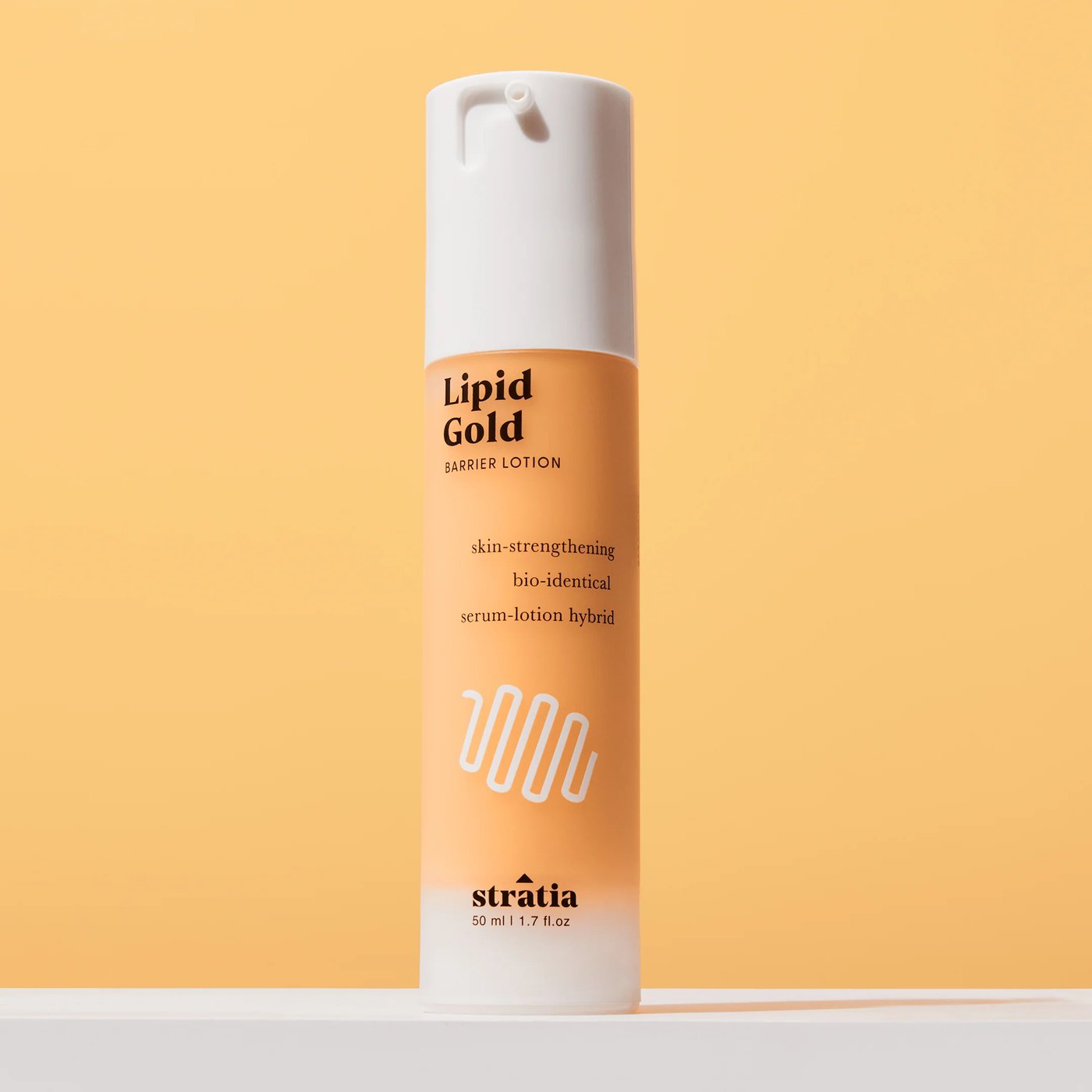
That batch became Liquid Gold in May 2016 at $24, eight bottles poured by hand. It centered on ceramides, cholesterol and fatty acids in a barrier ratio drawn from published work, and within a year Reed had left copywriting. Now called Lipid Gold and priced at $29, it remains the Stratia bestseller, mixed and packed in company space in Los Angeles. The promise is compact: closely researched skincare, made for anyone with skin. The bottle keeps a clean profile on the shelf, with a pump weighted to give the same small dose each time.
Second Skin cares less about plant romance than about touch. That suits Reed. Each Stratia product leaves out fragrance, alcohol and essential oils. Silicones and parabens are kept on purpose, and the glossary on the site gives a reason for each addition.
Plants are still present in the textures. Lipid Gold gets its yellow from sea buckthorn seed oil and sea buckthorn fruit oil, plus rosehip and cranberry seed oils. Interface, a peptide gel cream, holds licorice root. Nothing sits there for decoration. Each addition changes the feel or the finish, which is how this magazine judges a shelf object too: lovely to hold, honest about what it can do.
Lipid Gold gets its yellow color from two oils from one plant, sea buckthorn seed oil and sea buckthorn fruit oil, and your product page notes that very pale skin may notice a brief orange cast. Why hold onto an ingredient that arrives with that kind of warning
It stays because it works hard enough to justify the color. Each component in our formulas has a task, and sea buckthorn covers a lot in two label lines. The pulp oil runs bright red, the seed oil runs vivid orange, and both supply antioxidants, phytosterols and uncommon fatty acids. Inside a lotion meant to refill barrier fats, that profile fits. The rosehip oil adds linoleic and linolenic acid, and the cranberry seed oil brings a balanced mix of omega 3, 6 and 9.
No added dye creates the gold tone. The shade is natural. It does not stain and it disappears on rub-in for most complexions. On extremely fair skin it can leave a faint orange cast for a time, so evening use may suit those wearers better.
I would rather state that clearly than have someone notice it heading into the day.

In 2018 you told Refinery29 that you once told someone to simply wash with body wash and a loofah in the shower. What shifted when your own skin turned difficult in your early twenties
To be candid, much of this feels like making up for how clueless I used to be. As a kid I had clear skin, and that was pure genetics rather than care. So my guidance when friends asked was worthless. Then my early twenties arrived and all that neglect finally showed.
Once I care about a subject, I approach it like a researcher. I have always loved science. As a small child I hoped to become a paleontologist, later an astronomer, and in college I settled on chemistry. So I studied everything available: what truly drove the skin issues I noticed, and which topical ingredients and bases might actually influence them. Strong evidence exists for what helps skin and what fails. The problem in shops was that labels only told me what marketing teams chose to share. That mismatch is really what Stratia grew out of.
Before Stratia began you spent time on Reddit skincare forums and shared formulas on your blog, The Acid Queen, sending extra product from your own batches to readers. What did you learn from that community
Reddit holds groups where, if you wish to follow research deeply, excellent threads await. I belonged actively to those groups before I ever considered blending my own skincare, let alone offering it for sale. There I met a small circle of people mixing products at home in a methodical way. Less mashing fruit for a mask, and more sourcing small quantities of propylene glycol.
That hobby suited me. I missed bench time. Where some friends find joy in preparing a complex dinner, I found it in studying a base, compounding it, applying it to my face and watching it perform. When batches left extra, I posted them to readers, and requests for refills kept coming.
The group showed me what matters to users and what tone they prefer. When selling began, the lineup truly aimed to answer a need members had named.
In 2023 you told The Quality Edit that a peptide is like a little Lego tower, carried in Interface by microscopic taxi cabs. That same gel cream also holds licorice root extract, rosehip seed oil and two olive derived emulsifiers. How do plants belong inside a peptide formula
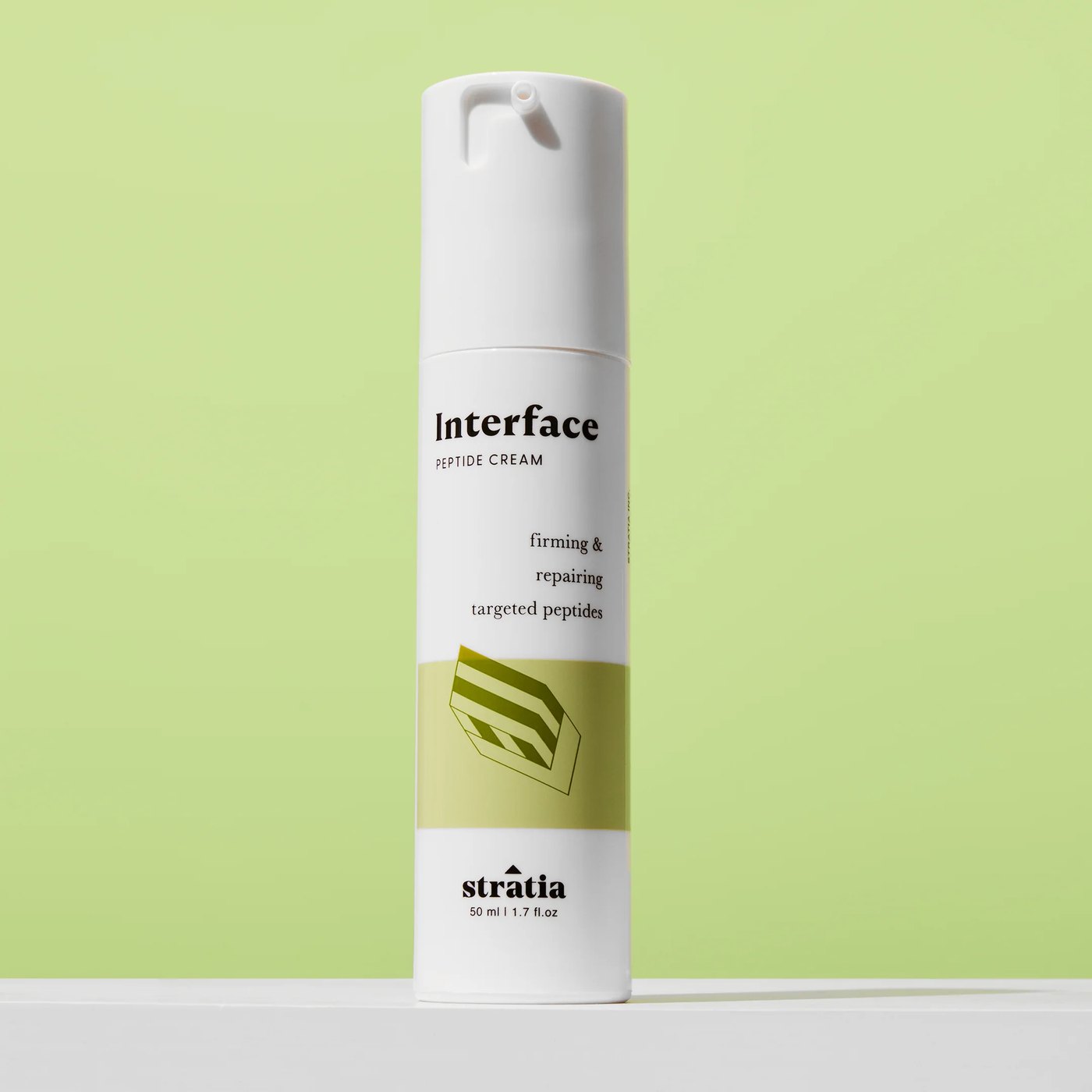
Peptides fascinate me. A peptide is only a brief string of amino acids, like a little Lego tower, and the possible versions are nearly endless. Interface contains seven. Several were selected to support visible firmness and bounce, and several target central proteins in the moisture barrier. The active peptides rest inside a skin compatible shell, and the shell carries escort peptides, which behave like microscopic taxi cabs, guiding actives toward the receptors where they belong rather than scattering elsewhere.
Botanicals act as the ensemble, and I offer that description with respect. Licorice root extract supports brighter, calmer looking skin. Rosehip seed oil supplies linoleic and linolenic acid. Squalane, sourced from plants, hydrates without heft, and emulsifiers derived from olive keep oil and water blended.
I tested extensively, and took apart several favorite moisturizers to learn their structure, until the gel cream felt deeply hydrating with no grease. Feeling refined matters to my definition of quality, since a cream only benefits skin when someone enjoys applying it morning and night.
Your About page asks readers to leave behind the clean washing and overly complicated rituals. Every Stratia product is free of fragrance, alcohol and essential oils, yet you use silicones happily and preserve with parabens. For a reader who thinks plant derived means gentle, where is your boundary
My boundary follows function rather than origin. Many present “free from” trends push companies to remove loads of safe and useful ingredients. Attention shifts away from contents toward absences, so shoppers receive fragrant water.
So I omit familiar irritants that offer skin no benefit. Scent tops that list. Essential oils join it, and that reflects no judgment of botany. It reflects judgment of perfume, which gives the barrier nothing and ranks among the likeliest triggers for sensitive faces. At the same time we keep silicones with pleasure, since they are safe and effective. Our parabens serve as a safe, mild and reliable preservative, and every water based formula requires preservation.
Stratia likely might have earned far more by chasing fads. Yet I aim only to create products that perform. A strong product is designed to work, feel refined and stay safe. Plant based is absent from those criteria, as is lab made.
Sensorially elegant is part of what quality means to me.
Alli Reed
Liquid Gold arrived in May 2016, an original formula based on studies you had read about a specific ratio of ceramides, cholesterol and fatty acids. Your first release was eight bottles. Why shape a first product around a ratio instead of a hero ingredient
Since the proportion creates the effect. The moisture barrier resembles bricks and mortar. Flattened cells form the bricks, and a fatty blend of ceramides, cholesterol and fatty acids forms the mortar. Once that mortar weakens, skin may turn dry yet oily, highly reactive, or breakout prone. Published work showed these three fats acting together, in balance, which suits copying and strengthening the natural barrier.
And that balance was scarce in stores. A gap separates marketing teams and cosmetic chemists, who seek the most stable, most pleasant, sweetest smelling cream, from biologists and dermatologists studying true skin requirements. I hoped to produce items I wanted as a shopper, items missing from shelves.
I expected a casual side project. I imagined a handful of orders packed on weekends. Hence eight bottles in batch one.
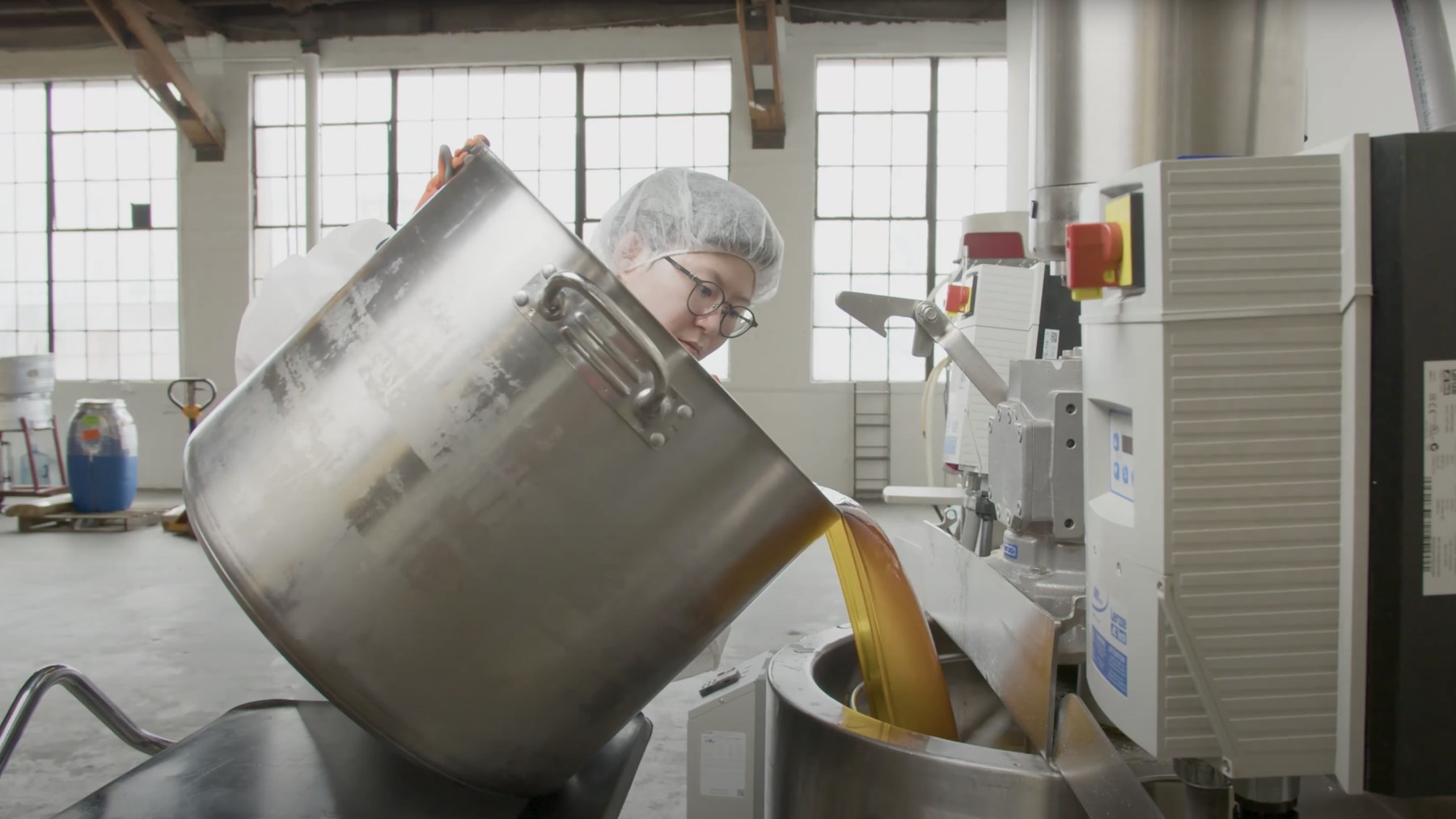
Stratia started in your kitchen, and by 2018 a first run of eight bottles had grown to 1,300 made in one day. Everything is still blended and made inside your own building at 2600 South Santa Fe Avenue in Los Angeles. What does holding production in house offer you
My kitchen held the first Stratia, with its small chemistry setup, and with growth I simply enlarged the laboratory again and again. I blended, filled and mailed all orders alone from my apartment, so fixed costs stayed tiny. Lacking backers or guides for next steps, I guessed my way toward larger output that preserved quality and safety.
Making our goods ourselves feels like a gift. It grants complete oversight of sourcing, routines and quality checks. It allows agility, so after a surprise sellout we can restock after a few days. It also lets visitors view exactly where their skincare originates, since production shares walls with the entire staff.
It also holds pricing where I prefer. Self formulation and self manufacture, plus attention to studies rather than fads, allows potent skincare at prices people can manage.
In 2018 you said a vitamin C serum, shared with fans a year and a half before it was ready, showed you not to talk about products in development. The current C plus C Serum pairs 15 percent vitamin C with CoQ10, and Stratia releases one or two products a year. What does a formula pass through first
That serum humbled me. I shared news long before I grasped the compounding hurdles, and countless issues can arise between concept and jar. Now I stay quiet about projects until launch nears.
It starts with play. I keep subscriptions to several research journals and watch for fresh findings or materials that might inspire a cream. Building a possible base in a spreadsheet ranks among my favorite tasks, then mixing trials at my small bench. That corner is my comfort zone. Next arrive many prototypes, then testing by volunteers. Roughly a thousand people have joined that pool.
Our cadence stays intentional. The central aim is to craft items without current equivalents. Where fine, affordable options already exist, I doubt I might add anything special. A launch happens only when I judge the product good.
You built Stratia from very meager savings, became profitable in the second month and reached 2 million dollars in sales by 2019. In November 2021 you accepted investment from Fable, the investment arm of Natura and Co. Why accept a partner you did not need
Fundraising was never required. Profits began in month two. Over years we declined opportunities, including big chains asking to carry us, because I refused outside pressure on formulas or release timing.
Later I sought counsel on operations rather than intuition. I had constructed everything through trial and error, and an expanding staff merited more than hunches.
Marketing followed the same path. Expansion came through personal recommendation, posts on Reddit and Instagram from users. We surely will avoid relying fully on Facebook ads. Companies seek advice on Reddit promotion, and I reply, “Don’t, don’t try it.” Redditors dislike pitches. Only plain candor succeeds, and though that phrase sounds like branding, I truly mean it: full belief in product quality and full openness with shoppers.
In 2021, about one in five Stratia customers was male, about one in five lived outside the US, and nearly half returned to buy again. For a Rooting Moss reader with reactive skin and a shelf full of oils, where should they start
Begin with Lipid Gold. It suits every skin type, and it especially comforts parched or over exfoliated complexions, a common profile among skincare lovers. Pump once or twice, around a dime sized amount, in the morning and at night. Normal to oily types may find it sufficient alone. Drier types can add a richer cream afterward. The slip feels cushioned at first, then dry to the touch, which makes layering simple on busy mornings.
For visible firmness, add Interface next. It layers easily, beneath makeup or above serums, and it may serve as the sole moisturizer as well. The gel cream cools slightly on contact, then settles with a soft bounce that suits fingertips.
Then maintain a brief regimen. Ignore alarmist claims and the 30 step regimen, and stick with evidence. I hope people find real delight in skincare and in the remarkable nature of their skin. Balanced skin reads as attractive skin, and that varies person to person.
Closing note from the desk
What lingers is the hand feel. Lipid Gold glides as a thin lotion, settles matte yet cushioned, and leaves a faint golden cast in the pump that disappears on most cheeks. Interface behaves like a cool gel cream, bouncy to the fingertip and weightless after a minute. Reed talks about caps, pumps and twice daily use the way a designer talks about chairs. Plants enter there as texture and tone, sea buckthorn for slip and color, rosehip for glide, licorice for a clearer look, and scent stays absent because it adds nothing to touch.
Stratia wanted barrier findings in daily bottles anyone with skin might keep out on a counter, mixed in one Los Angeles address by the team that designed them and described ingredient by ingredient. It opened with eight bottles for forum readers. Ten years on it still introduces only formulas its founder loves to apply, and only when the weight, finish and refill rhythm feel right for daily life.
Product spotlight
Lipid Gold, 29 dollars for 50 ml or 53 dollars for 100 ml. A featherweight barrier lotion with ceramides, cholesterol and fatty acids plus niacinamide, meant to support the look of a steady moisture barrier, and shaded gold by sea buckthorn seed and fruit oils. Press one to two pumps, near a dime sized dollop, morning and night. Normal to oily faces may stop there, while drier faces can seal with a thicker cream.
Interface, $29 for 50 ml. A springy daily gel cream with seven peptides, licorice root extract, rosehip seed oil, pro-vitamin B5 and hyaluronic acid, meant to support visible firmness and barrier feel. Press one to two pumps morning and night, alone as hydration or above serums and below makeup.

Melissa Whitaker
Melissa produces the interviews at Second Skin: the research, the question lists, the follow-ups. She asks every founder how a formula should feel at nine at night, then asks why it took eleven samples to get there.
More from Melissa Whitaker →